
TECHNOLOGY
9 Must-Try Video AI Generator Options for Beginners in 2026

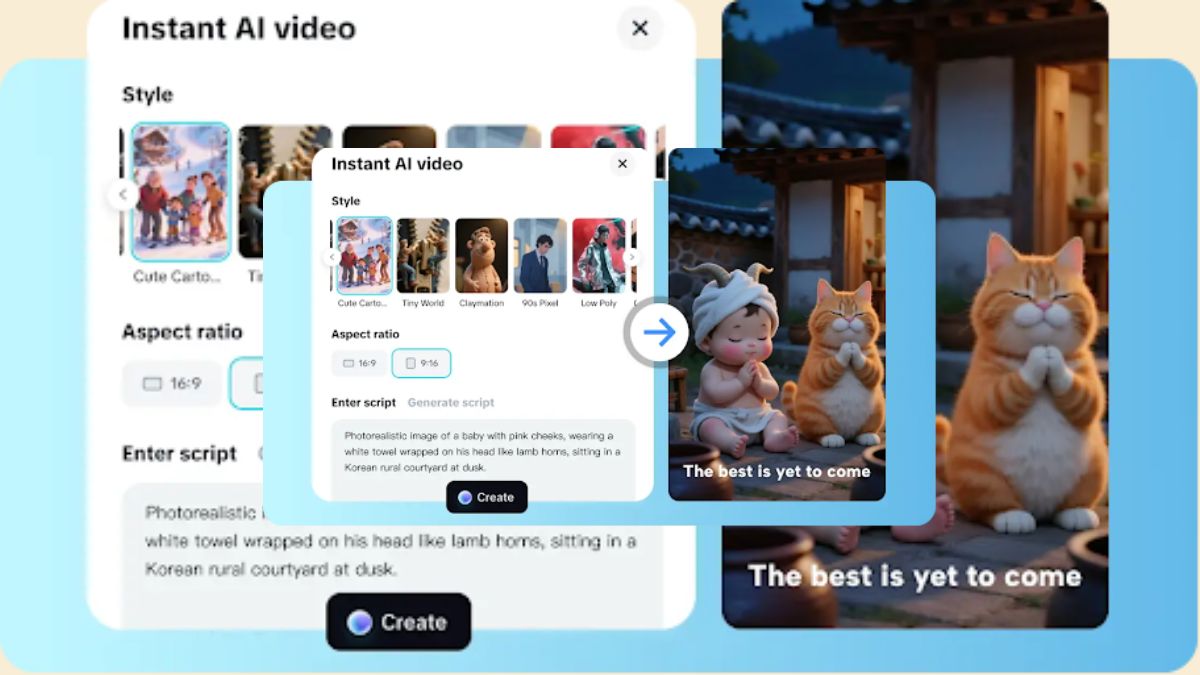
Every video AI generator I’m recommending has undergone structured, extensive testing to measure speed, rendering stability, AI accuracy, and workflow usability. I ran each platform through multiple real content tasks—from short social clips to long-form edits—to see how well they actually perform under pressure. This process exposed which tools slow you down and which ones genuinely streamline the creative process, making this list built entirely on verified performance. Some failed; a few delivered solid speed and quality. CapCut stood out with its smooth workflow, realistic visuals, and built-in editing. If you want a video AI generator that saves time and produces polished, ready-to-share videos efficiently. Keep reading!
What I Learned After Testing 30+ AI Video Generators
Before diving into the list, here’s a snapshot of the biggest lessons from my testing experience:
What Actually Matters for Beginners
| Priority | Why It Matters | My Preferred Tools |
| Speed | Beginners need output fast, not perfect | CapCut, Bing Video Creator |
| Simplicity | Too many menus ruin creativity | Fliki, Wisecut |
| Free Features | Paywalls kill motivation early | CapCut, Bing Video Creator |
| Auto-Editing | Removes the scary “timeline” learning curve | OpusClip, Wisecut |
| Social-Ready Exports | Most beginners post on TikTok/IG | CapCut, Zebracat |
| Script or Prompt Flexibility | Helps when ideas feel stuck | CapCut, Fliki |
Many “advanced” tools deliver stunning visuals—but require too much setup for new creators. I intentionally excluded complicated tools like Runway ML for this reason.
Why I Trust These Tools: A Quick Rundown of My Testing Criteria
I stopped relying on flashy ads and started judging tools by how well they helped me produce real videos. My personal evaluation focused on:
Simplicity
If I needed more than a few minutes to understand how to make my first clip, I moved on.
Automation Quality
AI should reduce steps, not add extra ones. I looked closely at caption accuracy, pacing adjustments, scene suggestions, and voice-over timing.
Free Access
Beginners shouldn’t be forced to commit financially just to test ideas.
Export Flexibility
I checked whether I could publish to TikTok, YouTube, and Instagram without reformatting.
Realistic Output
The video doesn’t need to look like a Pixar film; it just needs to be clean, clear, and engaging.
Summary of Findings – 10 Incredible Video AI Generators Tested in 2026
After spending time testing these video AI generators, I noticed that each tool brings something unique to the table. Some excel at fast social videos, others shine in automation or repurposing long content, while a few are perfect for script-driven narration. Here’s my personal take on the platforms that stood out in 2025:
- CapCut: This quickly became my top choice for creating vertical videos and YouTube Shorts. With features like Instant AI Video, avatar cloning, and pre-made templates, I could produce professional clips in minutes without losing creative control.
- Bing Video Creator: Ideal for rapid tests or proof-of-concept clips. I used it for short scripts and vertical videos, appreciating the speed and simplicity, especially when experimenting with multiple ideas.
- OpusClip: Perfect for turning long footage into short, social-ready clips. The AI detects highlights, inserts B-roll, and handles multi-format exports, saving me hours of editing time.
- Fliki: My go-to for narrated content and script-driven videos. The AI voices sound natural, and multilingual subtitle support lets me create accessible content quickly. I rely on it for product explainers and tutorials.
- Designs.ai Videomaker: Excellent for templated social media and marketing clips. I loved how the AI automatically syncs narration with visuals and applies brand colors, cutting down editing time drastically.
- Wisecut: I turn to this for raw footage that needs post-production automation. Silence trimming, highlight detection, and auto-captions make my content ready for social sharing almost instantly.
- Vidu: Great for stylized 2D animations. I used it for short creative projects where visual consistency across scenes mattered. The AI makes animation simple and fast without compromising quality.
- Zebracat: I rely on this for marketing and promo videos. It automates editing, integrates avatars, and allows fast exports, making it easy to produce visually appealing campaigns quickly.
- Pippit: My choice for e-commerce and product videos. Carousel layouts, shoppable links, and scheduling features let me create polished sales-focused content efficiently.
Each of these tools fits a specific purpose depending on the type of video I want to create. CapCut remains my favorite for fast, AI-driven social videos, while OpusClip and Fliki are indispensable for repurposing content and narration-heavy projects. Tools like Wisecut, Designs.ai, and Pippit streamline workflows, making video creation faster and more enjoyable. Together, these nine platforms cover everything from quick social clips to professional-grade content with minimal manual effort.
1. CapCut
CapCut is a free, web-first AI avatar creator and video studio built for social creators. The platform transforms text into full video based on instant AI workflows. Strong templates take care of layout and timing. There are over 100 pre-made avatars, and a cloning feature, which allows making a custom digital twin based on a short clip.
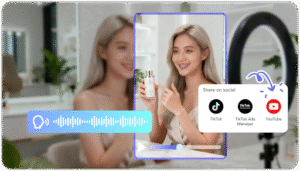
Auto voice and captions as well as scene assembly cut production time drastically. The interface focuses on short-form and delivers vertical video to be used on platforms. Script helpers and brainstorming minimize writer’s block. CapCut also offers an AI-assisted YouTube Shorts maker experience for rapid vertical edits. Most of the core functions are free and fast to the free users.
| Feature | Description |
| Instant AI Video | Converts scripts to videos in one click with automated scene arrangement. |
| Avatar Library | 100+ avatars with natural expressions and lip-syncing for narration. |
| Avatar Clone | Creates a digital twin from a short clip of yourself. |
| AI Templates | Pre-made workflows for education, news, promos. |
| Brainstorm Tool | Suggests storyboards, outlines, and creative ideas. |
| Auto Captions | Generates accurate, time-synced subtitles with formatting options. |
Pros: Fast short-form video creation, large avatar library, time-saving templates, intuitive interface.
Cons: Some advanced features require Pro subscription.

How you can create AI Videos using CapCut
Step 1: Start with your script
The first step is to access the “Script” feature. In your “Topic” and “Key points” (your video concept), type here. Once you hit “Create” the video script is completely customized to your inputs. This is the foundation of the flow of your video and its tone. Review the generated script, make any necessary edits, and once you’re satisfied, proceed to the next step.

Phase 2: Get your script to life
Head over to the “Scenes” section, where you can upload voiceovers, pick AI avatars, or select from a vast selection for your design collection. If you only want voiceovers, then go to the “Voice” page and choose the best voice for your story. Click on the tab “Apply for all scenes” to get a consistent audio experience. Select the “Captions” button to adjust engaging captions (for wide accessibility of your video), and then select the “Music” library to provide the perfect background music that will help create an emotional impact.
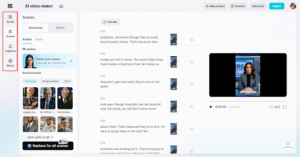
Step 3: Export or perfect the video
Finally, preview your finished video to make sure that all is as it should be. “Export” it directly if satisfied with the final settings. If you want to go even more fine, click “Edit more” to reveal more advanced tools like graphics and filters and a vast assortment of stock elements to take your creativity to the next level.

What I Observed
I used CapCut to produce a quick Instagram Reel for a product announcement. I uploaded a script, selected a cheerful avatar, and let the AI generate the video. Within minutes, the vertical clip was complete, captions synced, and visuals polished. I also tested the avatar clone feature with a short video of myself, which created a realistic digital version of me. The brainstorming tool gave me ideas for scene transitions, making the video feel professional without extra effort. The export was smooth, and I posted the reel immediately. CapCut’s speed, intuitive interface, and variety of tools make it my first choice for creating social videos efficiently.
2. Bing Video Creator
I often use Bing Video Creator when I need instant social video tests or short concept clips. I can type a quick prompt and generate a vertical video in seconds. The Sora AI model ensures style consistency across outputs, and I can preview content on mobile instantly. I appreciate that I don’t need any payment to experiment with multiple prompts. When I want fast proof-of-concept videos for social media or story-based posts, this tool is my go-to for speed and convenience.
| Feature | Description |
| Prompt-to-Clip | Generates video from text input in under 10 seconds. |
| Vertical-First Output | Ready for stories and social media posts. |
| Style Consistency | Maintains a unified look across multiple outputs. |
| Auto-Captions | Quick subtitle generation. |
| Free Tier | No watermark, download options for social sharing. |
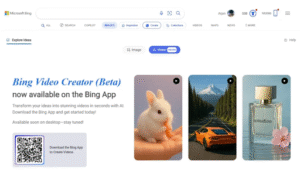
Pros: Free, rapid prototyping, mobile-friendly, social-ready.
Cons: Short video durations, visual quality limited, some styles locked.
What I Observed
I tested Bing Video Creator by writing a short script for a social media teaser. Within 10 seconds, the tool generated a vertical video ready for posting. I appreciated the speed and simplicity. Although I noticed minor visual quality limitations compared to CapCut, it was perfect for quick tests or short promotional clips. The free tier allowed multiple prompt experiments without any cost, making it ideal for brainstorming content ideas.
Gemini Omni AI Video Communication is an advanced AI-powered technology that enables more natural and interactive video conversations through real-time voice, video, and multimodal understanding. By combining artificial intelligence with live communication, it can analyze speech, facial expressions, text, and visual context to create smarter virtual meetings, customer support, online learning, and collaboration experiences. This next-generation communication approach helps users interact with AI in a more human-like and seamless way across devices and platforms.
3. OpusClip
I turn to OpusClip whenever I need to repurpose long footage into short, viral-ready clips. I can upload recordings from webinars, podcasts, or streams, and the AI detects highlights automatically. I rely on the B-roll insertion and captioning features to make clips polished without manual edits. I love that I can prepare content for multiple social formats in a single workflow. OpusClip saves me hours, allowing me to focus on other creative tasks while still producing professional, shareable videos quickly.
| Feature | Description |
| Highlight Detection | Identifies shareable moments automatically. |
| AI B-Roll | Improves pacing and visual interest. |
| Captioning | Auto subtitles and styling. |
| Multi-Aspect Ratio | Prepares clips for Instagram, TikTok, YouTube Shorts. |
| Free Tier | Monthly processing allowance for testing. |
Pros: Efficient repurposing of long content, automatic enhancement, social-ready exports.
Cons: Not suited for creating videos from scratch, limited deep customization.
What I Observed
I used OpusClip on a 30-minute webinar recording. The tool instantly found key segments, added AI B-roll, and produced multiple vertical clips suitable for TikTok and Instagram. Captions were accurate, and the highlights were relevant. The workflow was straightforward; I only had to adjust minor details before exporting. I found it extremely useful for repurposing existing content quickly without re-editing from scratch.
4. Fliki
I use Fliki when I want to turn scripts into fully narrated videos quickly. The AI voices sound natural, and I can clone voices for consistency across multiple projects. I combine visuals and timelines effortlessly and add royalty-free music without hassle. I rely on Fliki for multilingual subtitles, making my content accessible to a global audience. When I need professional-looking narrated videos without spending hours recording and editing, Fliki gives me a fast, reliable solution that’s perfect for my content pipeline.
| Feature | Description |
| Script-to-Video | Transform text into complete videos. |
| Voice Cloning | Maintain consistent voice across clips. |
| Scene Builder | Match visuals to narration automatically. |
| Royalty-Free Music | Auto-sync with scenes. |
| Multi-Language Subtitles | Supports 80+ languages. |
Pros: Lifelike narration, fast video creation, simple timeline edits.
Cons: Heavy customization may require premium, visuals can feel templated.
What I Observed
I tested Fliki by creating a product explainer video. I uploaded a script, chose a professional AI voice, and added background visuals. The voice was natural and in sync with the text. Editing the timeline was simple, and I could preview the video before exporting. The free tier was enough for testing, and I appreciated the fast, polished output. Fliki is ideal for script-driven videos or narrated content.
5. Designs.ai Videomaker
I use Designs.ai Videomaker whenever I need templated social clips quickly. I upload my scripts, and the AI matches stock visuals, synchronizes narration, and applies brand elements automatically. I enjoy being able to swap themes and styles in seconds. I find trial credits useful to experiment without committing financially. When I want multiple branded promo clips fast, Designs.ai reduces my workload significantly. I rely on it for marketing campaigns where consistency, speed, and professional results are essential without spending hours manually editing.
| Feature | Description |
| Template Library | Pre-made scenes for fast video creation. |
| Brand Kit Integration | Include logos, colors, fonts. |
| Auto Sync | Align narration and visuals automatically. |
| Multi-Format Export | Resize for TikTok, Instagram, YouTube. |
Pros: Quick templated workflows, brand consistency, trial credits.
Cons: Templates may feel repetitive, high-res exports gated.
What I Observed
I tested Designs.ai by creating a promotional video for social media. I uploaded a script, chose a pre-designed template, and applied my brand colors and logo. The AI matched the narration perfectly with the visuals. Exporting was fast, and the result looked professional. While the template style felt a bit repetitive, I appreciated how quickly I could create multiple clips without manually editing every scene. This tool is ideal for marketers needing fast branded videos.
6. Wisecut
I often turn to Wisecut for quick post-production work because it automates silence removal, pacing adjustments, and highlight detection. I upload raw footage, and the AI handles captions and translations, which saves me hours of manual editing. I find the interface simple and distraction-free, allowing me to focus on creative tweaks rather than tedious adjustments. Wisecut ensures that my videos are social-ready almost instantly. Whenever I need clean, polished content fast, I rely on this tool to make my raw footage look professional.
| Feature | Description |
| Silence Trimming | Auto remove pauses for smooth pacing. |
| Highlight Detection | Identifies shareable segments. |
| Auto Captions & Translation | Subtitle generation in multiple languages. |
| Quick Export | Minimal steps to social-ready clips. |
Pros: Clean automation, fast workflow, accurate captions.
Cons: Limited creative styling, high-res export paid-only.
What I Observed
I used Wisecut on a webinar recording to create short highlight clips. The tool automatically removed silences, added captions, and adjusted the background music. I only had to make minor tweaks before exporting. The AI detected key moments very accurately, making the video ready for social posting within minutes. It’s perfect for creators who want clean, shareable content without manual edits.
7. Vidu
I use Vidu when I want stylized 2D animated clips or a cohesive visual style across scenes. I can input text or images, and the AI maintains continuity throughout the video. I find it especially useful for small projects or team collaborations where I want quick, polished outputs. Vidu helps me create short creative clips without needing to manually animate every scene. Whenever I want visually consistent, stylized videos that feel professional, I use Vidu because it’s fast, simple, and delivers results that meet my creative standards.
| Feature | Description |
| 2D Animation | Create cohesive animated scenes. |
| Multi-Input | Supports text and image inputs. |
| Style Consistency | Maintains visual continuity across scenes. |
| Fast Export | Short project turnaround. |
Pros: Stylized output, multiple input types, quick results.
Cons: Limited advanced customization, free access varies.
What I Observed
I experimented with Vidu by converting a product illustration into a stylized 2D animation. The system maintained consistent visuals across scenes and generated subtitles automatically. Export was fast, and the animation looked polished. Although customization was limited, I found it simple and effective for short creative videos with a cohesive style.
8. Zebracat
I rely on Zebracat for marketing and promotional videos when I need avatars, templates, and automated editing. I can add voiceovers, scene suggestions, and call-to-action overlays with minimal input. I appreciate the fast export speeds, which let me post campaigns directly to social media. When I’m short on time but still want professional marketing clips, Zebracat handles most of the workflow automatically. I use it when I need product promos that are visually appealing, efficiently edited, and ready to engage audiences quickly.
| Feature | Description |
| AI Avatars | Use avatars for narration and demos. |
| Auto Editing | Timeline edits handled automatically. |
| CTA Templates | Add call-to-action overlays. |
| Fast Export | Quickly shareable content. |
Pros: Efficient promo clips, avatar integration, automated editing.
Cons: Avatar realism limited, few motion controls.
What I Observed
I tested Zebracat for a product launch clip. I selected an avatar and applied a promotional template. The AI auto-edited the video, added a voiceover, and positioned a CTA overlay. Exporting was fast, and I posted directly to social media. The avatars looked slightly artificial in close-ups, but overall, the tool was highly efficient for marketing purposes.
9. Pippit
I use Pippit for e-commerce and shop-related content because it streamlines product video creation and scheduling. I can apply commerce-focused templates, add shoppable tags, and track analytics without extra tools. I rely on it for carousel videos and campaign planning, which saves me time and effort. The free trial allows me to experiment with formats and workflows before committing. Whenever I need professional-looking, conversion-focused videos for online stores, I turn to Pippit because it combines speed, automation, and performance tracking efficiently.
| Feature | Description |
| Commerce Templates | Pre-designed layouts for product promotion. |
| Scheduling | Plan posts in advance. |
| Analytics | Track performance metrics. |
| Carousel Video Builder | Multi-product video creation. |
Pros: Streamlined commerce videos, scheduling, analytics.
Cons: Limited creative flexibility, some templates paid.
What I Observed
I used Pippit to create a carousel video for a small online store. The template made layout easy, and I embedded shoppable links directly. Scheduling the posts saved me time, and the analytics dashboard helped track performance. While it’s primarily for commerce, the workflow was intuitive, making it ideal for online sellers who want fast, professional videos without much manual editing.
Comprehensive comparison for better selection
I’ve tested many video AI generators over the years, and I’ve learned that the best tool isn’t always the one with the flashiest features. It’s the one that fits your workflow, helps you create efficiently, and allows you to focus on storytelling rather than struggling with technical hurdles.
| Tool | Platform Compatibility | Rating (Overall) | Price | User Friendliness | Best Uses |
| CapCut | Web, Windows, iOS, Android | 4.9/5 | Free; Pro $19.99/month | 5/5 | Social videos, short-form content, YouTube Shorts, avatar-based videos |
| Bing Video Creator | Web, iOS, Android | 4.5/5 | Free | 4.8/5 | Quick test clips, social media teasers, vertical videos, proof-of-concept videos |
| OpusClip | Web, Windows, Mac | 4.6/5 | Starter $19/month; Pro $57/month; Enterprise Custom | 4.7/5 | Repurposing long videos, highlights extraction, TikTok/IG short clips |
| Fliki | Web, Windows, iOS | 4.5/5 | Free trial; Basic $21/month; Premium $132/month | 4.8/5 | Script-to-video, narrated content, multilingual subtitles, product explainers |
| Designs.ai Videomaker | Web, Windows, Mac | 4.4/5 | Free trial; Basic $19/month; Pro $49/month; Enterprise Custom | 4.7/5 | Templated social videos, branded content, marketing promos |
| Wisecut | Web, Windows, Mac | 4.3/5 | Free (with watermark); Pro $9.90/month | 4.6/5 | Raw footage automation, silence trimming, social-ready highlights |
| Vidu | Web, Windows, Mac | 4.2/5 | Free limited access (beta); Paid $29/month for 500 credits | 4.5/5 | Stylized 2D animated videos, short creative clips, consistent visual outputs |
| Zebracat | Web, Windows, iOS | 4.1/5 | Free trial; Starter $29/month; Pro $99/month | 4.4/5 | Marketing clips, avatars, promo videos, CTA-focused content |
| Pippit | Web, iOS, Android | 4.0/5 | Free trial; Standard $19/month; Premium $39/month | 4.3/5 | Commerce videos, product demos, shoppable content, scheduled posts |
By focusing on these factors, you’ll choose a free video AI generator that fits your workflow and produces professional-quality results. I’ve found that such tools make creating videos both easy and enjoyable.
Conclusion
Each person decides on a service in terms of needs, channels, time. CapCut is the best choice to use in quick verticals, faceless narration, and instant template-based builds. It is a combination of avatars, brainstorming and one-click video generation. CapCut commonly accelerates projects through idea to shareable file. OpusClip is good when it comes to repurposing long content. In the case of text-to-voice pipelines, Fliki is suitable. In the case of raw edit automation, the task is handled by Wisecut. In the case of very basic prompt tests, Bing Video Creator can provide instant proof-of-concept videos. On a personal level, CapCut is highly recommended to those creators who are interested in the quickest path to good results. Speed and capability balance make CapCut my first choice.
FAQs
Do you have a suggestion for a good free online video AI generator?
CapCut is highly recommended. It offers free AI video generation, Instant AI Video creation, avatar cloning, templates, and brainstorming tools—all optimized for fast, professional-quality social videos.
Can CapCut video AI generator create videos for YouTube Shorts?
Yes, CapCut has a built-in AI YouTube Shorts maker that simplifies the entire process of creating short-form vertical videos. It allows instant editing, automatic aspect ratio adjustment, and optimized export settings, ensuring videos fit perfectly for YouTube Shorts without any manual resizing.
Which tool is best for creating social media AI videos quickly?
CapCut video AI generator stands out as one of the most efficient platforms for rapid social media video creation. With AI-powered automation, ready-made templates, and one-click editing tools, it enables users to produce professional-quality videos in minutes, perfectly tailored for platforms like TikTok, Instagram, and YouTube Shorts.
Is it possible to generate AI avatars with CapCut video AI generator for free?
Yes, CapCut video AI generator offers access to over 100 free AI avatars, giving creators a wide range of digital characters for different video styles. It also includes an option to clone and customize your own avatar with unique facial expressions and voiceovers, ideal for creating personalized video content.


Cybersecurity has become an essential part of running a modern business. As organizations increasingly depend on cloud platforms, connected devices, online applications, digital identities, and remote work environments, protecting digital assets has become more challenging. PrimaSecure.com is a cybersecurity provider focused on helping organizations across Africa address these challenges through managed security services, risk management, threat detection, and digital trust solutions.
What Is PrimaSecure.com?
Prima Secure is an African-focused Cybersecurity-as-a-Service provider that helps organizations improve their cyber resilience. The company says its approach is designed around the operational, regulatory, connectivity, and resource realities faced by businesses across the African continent.
Rather than requiring organizations to replace their existing security infrastructure, Prima Secure emphasizes a vendor-agnostic approach. Its services can work with existing networks, endpoints, cloud environments, and identity systems.
Why Cybersecurity Matters for Businesses
Businesses today handle large amounts of sensitive information, including customer details, financial records, employee information, intellectual property, and operational data. A successful cyberattack can potentially interrupt operations and expose confidential information.
Common threats include phishing, malware, ransomware, unauthorized access, compromised credentials, and vulnerabilities in software or infrastructure. Because threats can occur outside normal business hours, continuous monitoring can play an important role in an organization’s security strategy.
Managed Cybersecurity Services
One of Prima Secure’s key areas is managed cybersecurity. Its services are designed to provide ongoing monitoring, detection, and response rather than relying solely on occasional security assessments.
The company describes its managed security approach as providing continuous threat monitoring and support from security analysts. This can be particularly useful for organizations that do not have the resources to establish and operate their own 24/7 Security Operations Centre (SOC).
24/7 Security Monitoring
Cyber threats can emerge at any time, making continuous visibility an important component of cybersecurity.
Prima Secure provides 24/7 monitoring as part of its managed security offering. Its security operations approach focuses on three broad activities: watching the environment for potential threats, analyzing suspicious activity, and taking appropriate action when incidents are identified.
Continuous monitoring can help organizations identify suspicious activity earlier and support faster investigation and response.
Threat Detection and Response
Detecting a threat is only one part of cybersecurity. Organizations also need processes for investigating incidents and responding appropriately.
Prima Secure provides threat detection and response services intended to identify, analyze, and respond to evolving cyber threats. Its threat-response offering also focuses on incident management, risk management, and reducing the potential impact of security incidents.
Endpoint Detection and Response
Endpoints such as laptops, desktops, and servers can become targets for attackers. Endpoint Detection and Response (EDR) solutions help organizations monitor endpoint activity and investigate potentially malicious behavior.
Prima Secure lists EDR among its managed cybersecurity capabilities and describes its offering as including continuous monitoring, threat hunting, remediation, and integration with leading EDR platforms.
Vulnerability Management
No cybersecurity strategy is complete without understanding where weaknesses exist.
Vulnerability management involves identifying security weaknesses, assessing their potential importance, prioritizing them, and taking steps to address them. Prima Secure includes vulnerability management among its cybersecurity services and describes the process as continuous rather than a one-time activity.
Regular vulnerability assessments can help businesses gain a clearer understanding of weaknesses across applications, systems, and networks.
Identity and Access Security
Unauthorized access remains a significant cybersecurity concern. Strong identity and access controls can help organizations ensure that users have appropriate access to systems and information.
Prima Secure’s services include Multi-Factor Authentication (MFA) and Privileged Access Management (PAM). MFA requires users to provide additional verification beyond a password, while PAM focuses on controlling, monitoring, and auditing privileged accounts.
Email Security
Email remains an important communication channel for businesses and is also frequently targeted by cybercriminals.
Prima Secure provides email security services designed to address threats such as phishing, malware, and spam. Email security can incorporate filtering, encryption, and authentication technologies to improve protection for business communications.
SSL Certificates and Digital Trust
Cybersecurity also involves protecting communications between websites and their users. SSL certificates help establish encrypted connections and authenticate websites.
Prima Secure offers SSL certificates as part of its broader digital security services. Its privacy policy also identifies digital trust, PKI, and SSL-related services among the company’s offerings.
For businesses operating websites, applications, and online services, properly managed digital certificates can be an important component of a broader security strategy.
A Security Framework Based on NIST
Prima Secure states that its cybersecurity services are structured around the NIST Cybersecurity Framework. The framework provides a structured way to approach cybersecurity risk through functions including Govern, Identify, Protect, Detect, Respond, and Recover.
Using a recognized framework can give organizations a systematic way to evaluate their security posture rather than approaching cybersecurity as a collection of unrelated tools.
Vendor-Agnostic Security
A notable aspect of Prima Secure’s approach is its focus on working with technology organizations already use.
Instead of automatically requiring a business to replace existing security products, Prima Secure says it evaluates the existing environment and works to integrate appropriate tools. This approach may be useful for organizations with established security infrastructure that want additional monitoring, expertise, or response capabilities without completely rebuilding their technology stack.
Cybersecurity for African Organizations
Prima Secure positions itself specifically around the African market. The company states that its services take into account regional operational, regulatory, connectivity, and resource considerations.
Its listed locations include offices or regional operations in South Africa, Zimbabwe, and the Democratic Republic of the Congo. The company’s main office is listed in Sandton, South Africa.
This regional focus allows Prima Secure to combine cybersecurity technologies with services aimed at organizations operating in African markets.
Why a Managed Security Approach Can Be Useful
Maintaining cybersecurity internally can require security specialists, monitoring infrastructure, threat intelligence, incident-response processes, and continuous staff development.
A managed cybersecurity provider can provide access to security monitoring and specialist expertise without requiring every organization to build a full internal security operation. Prima Secure specifically promotes its managed SOC services as an alternative to maintaining an in-house 24/7 Security Operations Centre.
Final Thoughts
PrimaSecure.com focuses on helping organizations strengthen their cybersecurity through managed security, threat detection and response, vulnerability management, identity protection, email security, SSL certificates, and related services.
Its vendor-agnostic model is designed to work with existing technology, while its NIST-based approach provides a structured framework for managing cybersecurity risks. With an emphasis on African organizations, Prima Secure offers a combination of continuous monitoring, security expertise, and technology integration aimed at helping businesses improve their digital resilience.
As cyber threats continue to evolve, organizations can benefit from treating cybersecurity as an ongoing process rather than a one-time project. Services such as continuous monitoring, vulnerability management, threat detection, and incident response can form important parts of that long-term strategy.

A good video does not always require an expensive camera, a professional studio, or years of experience with editing software. The way people produce digital content is changing rapidly as artificial intelligence becomes part of everyday creative workflows.
What makes today’s AI tools particularly interesting is that they can work with ordinary instructions. Instead of manually doing every step, creators can explain what they want and get help planning, writing, designing, editing, or improving their content. This is opening up video production to people who previously found traditional editing software difficult to use.
Video Production Is Becoming More Conversational
Conventional editing is based heavily on controls and commands. Users select clips, move them along a timeline, adjust settings, add effects, and repeatedly preview the result. Although this approach offers detailed control, it can be time-consuming for someone who only wants to produce a straightforward video.
AI introduces a different interaction model. A creator can describe an objective in everyday language and use an AI-powered system to help translate that idea into production tasks. This is where concepts such as a ChatGPT video editor online become relevant to the broader evolution of conversational creative software.
Instead of thinking only in terms of editing buttons, users can think about the result they want: a faster introduction, shorter pauses, clearer captions, a different format, or a more engaging sequence.
One Idea Can Produce Many Versions
Creative work often involves experimentation. A social media creator might have one basic concept but several possible ways to present it. Traditionally, testing each version can require substantial editing time.
AI makes this experimentation easier. A single concept can be adapted into different lengths, tones, formats, or audiences. A long explanation could become a short educational clip, while the same subject could be turned into a series of social posts or a narrated video.
This flexibility is particularly useful for people who publish regularly. Rather than treating every piece of content as an entirely separate project, creators can develop variations from a central idea.
AI Can Help With the Parts Viewers Never Notice
Some of the most useful applications of AI are not necessarily visible in the final video.
For instance, preparing subtitles manually can take a significant amount of time. Searching through a lengthy recording to find a particular statement can also be tedious. Transcription and content analysis can help reduce this manual effort.
AI can assist with other behind-the-scenes tasks as well, including:
- Converting speech into editable text
- Identifying sections of a recording
- Generating draft captions
- Summarizing lengthy footage
- Suggesting titles and descriptions
- Preparing content for different screen dimensions
- Helping organize large collections of clips
These functions can make the overall production process more manageable without changing the creator’s original message.
The Importance of Better Storytelling
Faster editing does not automatically create better videos. A technically polished video can still fail if it lacks a clear purpose or becomes difficult to follow.
This is why storytelling remains important even when AI handles some production tasks. Before creating a video, it helps to know what the viewer should understand, feel, or do after watching it.
For example, a small business explaining a service may achieve better results with a simple problem-and-solution structure than with excessive visual effects. Similarly, an educational video should prioritize clarity rather than filling every second with animation.
AI can provide assistance, but the creator still needs to decide what deserves attention.
AI Video Tools Are Useful Beyond Social Media
Although short-form platforms have helped popularize AI-assisted video creation, these technologies have applications far beyond entertainment.
Teachers can use AI to develop visual learning materials. Companies can create internal training videos. Freelancers can prepare presentations for clients. Non-profit organizations can produce informational campaigns without maintaining a large production team.
Even personal users can benefit. Someone documenting a family event, creating a travel diary, or putting together a birthday video may find AI useful for organizing footage and adding simple creative elements.
Images Are Becoming Part of the Same Workflow
Video creation is also becoming closely connected with generative image technology. Instead of searching for an appropriate stock image every time a visual is needed, creators can generate an original concept based on a written description.
For example, a person creating a video about future technology might need an illustration of a futuristic workspace. Generative AI can produce a visual matching the intended atmosphere, which can then be incorporated into the wider project.
This connection between text, images, and video means creators can build a larger portion of their visual content from an initial written concept.
Why Human Review Still Matters
AI-generated material is not automatically perfect. It can misunderstand instructions, introduce visual inconsistencies, create inaccurate captions, or produce an edit that technically works but feels unnatural.
For this reason, reviewing AI-assisted content remains essential. Creators should check names, dates, facts, subtitles, transitions, visual details, and audio before publishing.
There is also a creative reason for human involvement. AI can suggest possibilities, but it does not necessarily understand the personal context behind a story. The final decisions should reflect the creator’s intended message and audience.
The Next Stage of Digital Creativity
AI is not simply adding another feature to video-editing software. It is changing the way people think about the production process itself.
The traditional approach often begins with technical questions: Which tool should I use? Which setting do I need? How do I perform this edit?
An AI-assisted workflow can begin with a different question: What do I want the audience to see and experience?
That shift could make digital video creation more approachable while giving experienced creators new ways to experiment. As AI systems become more capable, the distinction between writing a script, designing visuals, and editing footage may continue to become less noticeable.
For creators, the real advantage is not simply producing videos faster. It is having more freedom to turn an idea into something visual without allowing technical complexity to become the biggest obstacle.

There’s a moment every growing business hits. The printer stops working, the server acts up, someone can’t log into their email, and the person you normally call doesn’t pick up. Or they pick up, but they can’t come by until Thursday. Meanwhile, three people are sitting idle, a client deadline is slipping, and you’re the one fielding the frustration.
For a long time, that setup worked fine. You had a number to call, someone showed up eventually, and the problem got fixed. But at some point, “call the IT guy” stops being a plan. It becomes a gamble. And the businesses that don’t catch this shift early enough usually pay for it in downtime, stress, and quiet security risks that no one is watching for.
If your business has been relying on break-fix IT support, the kind where you only call when something is already broken, here are the signs that model may have run its course.
Your Downtime Is Costing More Than the Repair
Most business owners underestimate what an hour of downtime actually costs. It’s not just the hourly wage of the people sitting around waiting. It’s the missed calls, the delayed proposals, the rescheduled clients, the employee who stays late to catch up, and the mental tax of everyone being slightly on edge.
When you only call IT when something breaks, you’re paying for the repair. But you’re also absorbing the cost of everything that went wrong before the repair, and everything that stalled while you waited for someone to show up. As your business grows, those windows get more expensive. A two-hour outage at a five-person company is an inconvenience. The same outage at a twenty-person company is a real problem.
If you’ve started noticing that the cost of the downtime keeps outpacing the cost of the fix, the break-fix model is quietly draining your business.
The Same Problems Keep Coming Back
Break-fix support is reactive by design. Something breaks, someone fixes it, everyone moves on. But if you’re seeing the same issues resurface, the same server warnings, the same email glitches, the same “slow network” complaints, that’s not a series of random problems. That’s a sign no one is maintaining your systems proactively.
A lot of recurring IT issues come from neglected updates, aging hardware, or configuration problems that were never fully resolved the first time. When your only IT resource is someone who comes in to put out fires, there’s no one keeping an eye on the systems that haven’t caught fire yet. And those are usually the ones that cause the biggest problems when they finally do.
If your IT issues feel familiar, it’s because no one is getting ahead of them.
You Have No Idea What’s Actually Running on Your Network
This is one of the most common blind spots for growing businesses. When you started out, you probably knew every device, every account, and every piece of software in your office. Three years and ten hires later, that’s no longer true.
There are old laptops still connected to the network. Accounts for employees who left six months ago. Software subscriptions no one is using but someone is still paying for. Maybe a personal phone or tablet that synced to your email server. Possibly a shadow IT setup where someone installed their own tool because the official one was too slow.
Break-fix support doesn’t catch any of this, because it’s not designed to. It only sees what you point it to. The problem is that the things you don’t know about are often the things that create security vulnerabilities, compliance gaps, and surprise costs.
If you can’t confidently answer what’s on your network right now, that’s a sign your IT model has fallen behind your business.
Onboarding and Offboarding Have Become a Headache
Adding a new employee shouldn’t be a project. Setting up a laptop, configuring email, granting access to the right systems, and making sure security settings are correct should be a repeatable process, not a scramble.
The same goes for offboarding. When someone leaves, their accounts need to be closed, their data needs to be handled properly, and their access needs to be removed promptly. This isn’t just an administrative task. It’s a security issue. Former employees who still have access to company systems is one of the most common, and most preventable, security risks small businesses face.
If every new hire feels like starting from scratch, and every departure leaves you wondering whether their accounts are actually closed, your IT setup isn’t keeping up with your team.
Security Is Something You Worry About But Don’t Address
Here’s an honest question. When was the last time someone reviewed your firewall settings? Tested your backups? Checked whether your antivirus was actually updated on every device? Verified that your team had multi-factor authentication turned on?
If you’re like most small business owners, the answer is either “I don’t know” or “never.” That’s not a criticism. It’s just what happens when IT is handled reactively. Security doesn’t break loudly. It doesn’t send you a notification. It just sits there, quietly under-protected, until something goes wrong.
The businesses that get caught in ransomware attacks, phishing scams, and data breaches usually aren’t negligent. They’re just running on a model that doesn’t include regular security maintenance. And by the time they realize it, the cost of fixing the aftermath is many times what proactive security would have cost.
Your Team Has Started Working Around IT
This one is subtle, but it’s a strong signal. When IT support is slow or unreliable, people find their own solutions. They start using personal email for work files. They install their own software. They share logins because it’s easier than waiting for a new account to be set up. They use free cloud storage tools to share documents with clients because the company system is too clunky.
None of this happens because people are careless. It happens because the IT support they have isn’t responsive enough to keep up with how they actually work. And every workaround creates a new risk, a new unmanaged account, a new piece of company data sitting outside your control.
If your team has quietly built their own tech stack around your official IT setup, the setup isn’t serving them anymore.
You’re Spending More Time Thinking About IT Than You Used To
This is the simplest test, and maybe the most telling one. If you find yourself thinking about IT more often than you used to, worrying about backups, wondering if your systems are secure, dreading the next time something breaks, that’s a sign the model isn’t working anymore.
IT should be infrastructure. It should run in the background, get maintained by someone who knows what they’re doing, and only demand your attention when you’re making a strategic decision. If it’s becoming a recurring topic on your mental list of things to worry about, the break-fix approach is no longer serving your business. It’s draining it.
What Outgrowing Break-Fix Actually Means
None of this means you made a mistake by relying on break-fix support. For a lot of businesses, especially in the early years, it’s the right fit. You didn’t need a full IT setup, you needed someone to call when something broke, and that worked.
But businesses change. Teams grow. Systems get more complex. Security expectations get higher. The model that carried you through year one or year three may not be the one that carries you through year ten.
Outgrowing break-fix support doesn’t mean you need to become an IT expert. It means you need a model that’s proactive instead of reactive. One where someone is monitoring your systems before they fail, maintaining your security before something exploits it, and planning your technology alongside your growth instead of chasing it from behind.
The shift usually happens gradually, and then all at once. A few slow responses turn into a real outage. A few recurring issues turn into a security scare. A few workarounds turn into a data problem you didn’t see coming.
The businesses that catch it early avoid the costly version of that story. The ones that don’t usually end up switching after a moment they wish they’d avoided.
If any of this sounds familiar, it’s worth asking a simple question. Not “who do I call when something breaks,” but “who’s making sure it doesn’t break in the first place.” That’s the difference between a vendor and a partner. And it’s the difference most growing businesses eventually need to make.
Frequently Asked Questions
What is break-fix IT support?
Break-fix IT support is a reactive model where you call a technician only when something is already broken. There’s no ongoing monitoring, maintenance, or planning. You pay for the fix, not for prevention.
How do I know if my business needs more than break-fix support?
Common signs include recurring problems, slow response times, downtime costs that keep rising, security gaps you’re not addressing, and team members working around your official IT setup because it’s too slow or unreliable.
What’s the alternative to break-fix support?
The most common alternative is a managed services model, where an IT provider proactively monitors, maintains, and secures your systems on an ongoing basis. This includes regular updates, security management, help desk support, and strategic planning.
Is managed IT more expensive than break-fix?
It depends on how you measure cost. Managed IT usually has a predictable monthly fee, while break-fix is variable and often unpredictable. For growing businesses, the cost of downtime, security incidents, and recurring issues often exceeds the cost of proactive management.
Can a small business benefit from proactive IT support?
Yes. Many small businesses assume they’re not big enough to need managed IT, but the security risks, compliance requirements, and reliance on technology are the same regardless of size. The threshold is lower than most people think.
What should I look for when moving away from break-fix support?
Look for a provider that offers proactive monitoring, clear response time commitments, security management, help desk support, and a relationship that feels like a partnership rather than a transaction. Transparency and responsiveness matter more than the specific tools they use.
-

 TOPIC1 year ago
Top 5 Features of Googlediqiu You Didn’t Know About
-

 TOPIC2 years ago
Why Large Waterproof Outdoor Rugs Are Essential for All Outdoor Spaces
-

 FASHION2 years ago
How to Layer Your White Dress for Cold Weather?
-

 TOPIC2 years ago
7 Expert Tips For Choosing The Best Basement Renovation Companies
-

 FASHION1 year ago
How to Choose Sunglasses That Perfectly Complement Your Summer Wardrobe
-

 BUSINESS1 year ago
Top 5 Features of Sowix Online That Every User Should Know About
-

 TOPIC1 year ago
Why Greece Katz Martian Has Everyone Talking in 2025
-

 FINANCE2 years ago
How TraceLoans Can Simplify Your Finances