
TOPIC
How Much THC Should Beginners Take in Gummies or Vapes?


You finally decided to try cannabis. Maybe a friend offered you a gummy at a party, or you picked up a vape pen from a dispensary after the budtender made it sound simple. Then you get home, stare at the packaging, and realize you have no idea what 10mg actually means — or whether one puff is one too many.
This is where most beginners go wrong. Not because they’re reckless, but because nobody gave them a real roadmap. Let’s fix that.
Why Getting the Dose Right Actually Matters
Taking too much THC your first time isn’t just unpleasant — it can be genuinely alarming. Heart racing. Paranoia creeping in. That awful feeling of being too high with no off switch. For some people, one bad experience like that kills any interest in cannabis forever.
Here’s the thing: the dose makes all the difference. The same compound that leaves one person giggling on the couch can send another into a spiral of anxiety — and the gap between those two experiences is often just a few milligrams, or a couple of extra puffs.
Understanding where to start, and why, is the difference between a good first experience and swearing off edibles permanently.
Gummies: The Slow Burn You Need to Respect
Edibles are one of the most popular ways for beginners to try cannabis. They’re discreet, pre-dosed, and don’t require any equipment. But they’re also the most common source of beginner horror stories — and here’s exactly why.
When you eat a gummy, your liver processes the THC. It gets converted into a compound called 11-hydroxy-THC, which is significantly more potent than inhaled THC and hits differently in the body. On top of that, edibles take anywhere from 45 minutes to 2 hours to kick in, depending on your metabolism, what you’ve eaten, and your body composition.
That delay is where people get into trouble. They take one gummy, feel nothing after an hour, take another — and then both hit at once.
The Beginner Gummy Dose
Start with 2.5mg to 5mg of THC. That’s it.
Most dispensary gummies come in 10mg doses. If that’s what you have, cut it in half or even in quarters for your first time. Yes, it feels like almost nothing. That’s the point.
A 2.5mg dose will give most first-timers a gentle, manageable experience — maybe a light sense of relaxation or a mild mood lift. A 5mg dose can produce more noticeable effects, especially if you’re THC-naive.
After you take it: wait a full two hours before deciding it’s “not working.” Find something low-stakes to do — watch a show, go for a walk, listen to music. Don’t sit there monitoring yourself every five minutes, because that’s a great way to spiral into anxiety regardless of the dose.
If after two hours you feel nothing, you can consider a small additional amount — but only if you’re comfortable and in a safe environment. Never double your dose chasing faster effects.
What 10mg Actually Feels Like
Standard 10mg gummies are where recreational users often land, but for a true beginner, 10mg can be overwhelming. Effects at this level typically include significant relaxation, altered perception of time, increased heart rate, and — for those who are sensitive — anxiety or paranoia.
If someone tells you “10mg is nothing,” they’ve built up a tolerance. For a first-timer with zero tolerance, it’s a lot.
Vapes: Faster, More Controllable — But Easy to Overdo
Vape pens have become the go-to for beginners who want something quick and portable. The appeal makes sense: the effects come on fast (usually within minutes), and you can stop at any point. That’s a real advantage over edibles.
But “fast” also means “easy to take too much before you realize it.”
How THC Hits When You Inhale It
When you inhale vaporized cannabis, THC passes directly into your bloodstream through your lungs. You’ll typically feel effects within 5 to 15 minutes, and the peak usually arrives within 30 minutes. The experience is shorter-lived than edibles — most people find inhaled effects taper off within 2 to 3 hours.
Because the onset is so quick, you have the advantage of being able to gauge how you feel before taking more. Use that advantage.
The Beginner Vape Approach
Start with one small puff and wait 15 minutes. That’s the entire strategy.
One puff means a short, controlled inhale — not a deep lung hit. Take it easy. You’re not trying to get maximum efficiency out of the cartridge; you’re trying to find your floor.
After 15 minutes, check in with yourself. Do you feel anything? A slight warmth, a bit of relaxation, a smile you didn’t expect? Good — that’s enough for now. Stay there, enjoy it, and don’t chase a “better” high on your first session.
If you felt almost nothing after 15 to 20 minutes, you can try one more small puff and wait again.
The Potency Problem with Vapes
Here’s something the packaging won’t always tell you clearly: most cannabis vape cartridges contain distillate or live resin concentrate with THC percentages ranging from 70% to 90%. These are not the same as flower. A single puff from a potent vape cart delivers far more THC than a single puff from a joint.
This is especially important if someone gives you a “dab pen” or a cart with no clear label. Proceed with extreme caution, and start even smaller than you think you need to.
Variables That Affect Your Experience
No two people respond to THC the same way, and several factors play a real role in how your first session goes.
Body weight and metabolism — These influence how THC is processed, though not in a perfectly linear way. Lean people aren’t necessarily less sensitive, and heavier people aren’t always more tolerant.
Empty vs. full stomach — Taking an edible on an empty stomach often speeds up onset and intensifies effects. A meal beforehand slows things down. Neither is “wrong,” but know which situation you’re in.
Your anxiety baseline — If you’re prone to anxiety in general, THC can sometimes amplify that. Starting with a very low dose in a comfortable, familiar environment matters even more for you.
Who you’re with — This sounds soft, but it’s real. Being around people you trust in a relaxed setting dramatically reduces the chance of a rough experience. Your first time probably shouldn’t be at a crowded social event where you feel pressure to perform.
CBD ratio — Some products contain both THC and CBD. A higher CBD ratio tends to soften the psychoactive effects of THC and reduce anxiety. For very sensitive beginners, a 1:1 product (equal parts THC and CBD) can be a gentler entry point.
If You Take Too Much: What to Do
It happens to almost everyone at some point. Here’s what you need to know.
First: you cannot physically overdose on cannabis. It will feel terrible, but it will pass. Remind yourself of this if panic sets in.
Second: find somewhere quiet and comfortable to sit or lie down. Drink water. If you have access to CBD (drops, a gummy, or a vape with high CBD), taking some can actually help counteract the overwhelming effects of THC. Black pepper is an old folk remedy that some people swear by — sniffing or chewing a few peppercorns can help ground you.
Third: don’t be alone if you can help it. Having a calm, sober friend nearby makes a significant difference.
The discomfort will typically peak within an hour of onset and gradually ease. Most people feel completely normal again within 4 to 6 hours.
A Simple Starter Framework
Whether you go with gummies or a vape, the principle is the same: start low, go slow, and respect the time it takes to feel effects.
- Gummies: Begin with 2.5mg. Give it two full hours. Only consider more if you feel nothing at all.
- Vapes: Start with one small puff. Wait 15 minutes. Add another only if the first produced minimal effect.
- Set and setting matter. Your environment and mindset going in shape your experience more than most people expect.
- Don’t mix with alcohol your first time. Alcohol significantly amplifies THC and makes nausea far more likely.
- Keep notes. Jot down what you took, how much, and how you felt. You’ll thank yourself later.
The Bottom Line
The goal of your first experience with THC shouldn’t be to get as high as possible. It should be to understand how your body responds to this compound — so you can make informed decisions going forward.
The people who have terrible first times almost always took too much, too fast, in the wrong environment. The people who become thoughtful, occasional users started small, stayed patient, and paid attention.
Start with less than you think you need. You can always take more next time. You can’t un-take what’s already in your system.
Always check the cannabis laws in your area before purchasing or consuming. If you’re using cannabis to manage a medical condition, consult a healthcare provider before starting.
Introduction
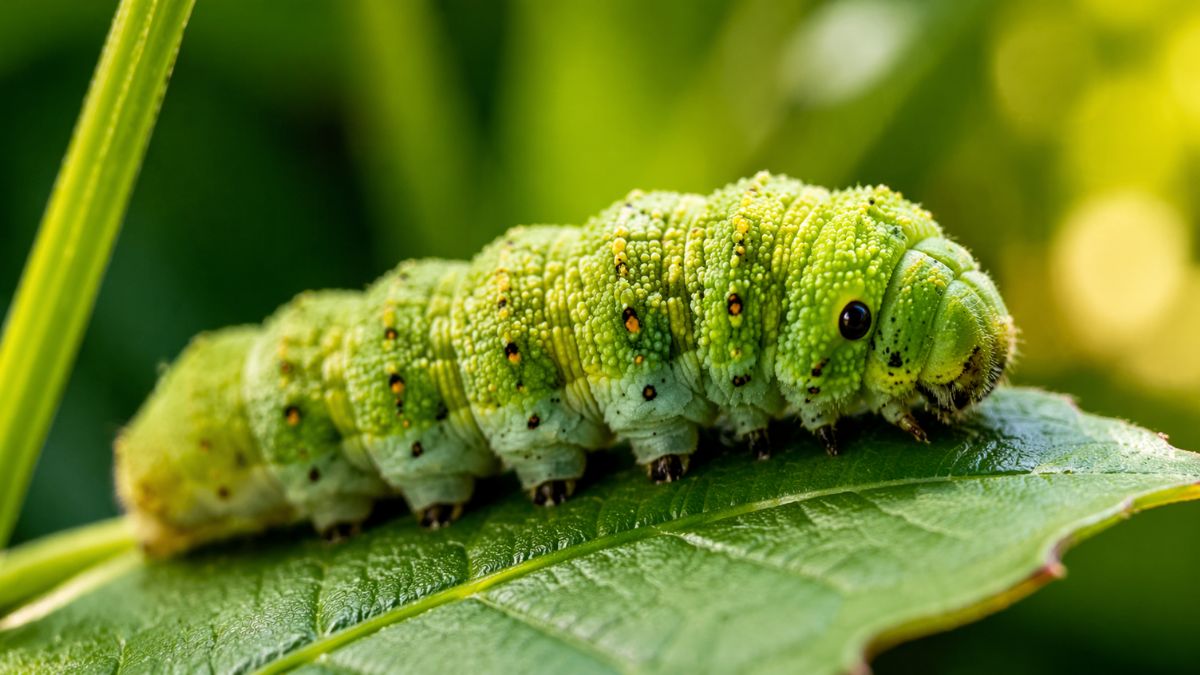
The munchkin caterpillar is a fascinating and often misunderstood stage in the life of many butterflies and moths. While the term “munchkin caterpillar” is not a strict scientific classification, it’s commonly used to describe small, compact caterpillars that appear rounded, short, and slightly chubby. These tiny creatures play a vital role in ecosystems, acting as both herbivores and a food source for other animals.
If you’ve ever spotted a tiny caterpillar munching away on leaves in your garden, chances are you’ve encountered one of these “munchkin” types. In this guide, you’ll learn how to identify them, understand their life cycle, and even care for them if you choose to observe them up close.
What Is a Munchkin Caterpillar?
A munchkin caterpillar refers to a small, stubby caterpillar with a compact body structure. These caterpillars are often early-stage larvae or belong to species that naturally have shorter bodies.
Key Characteristics
- Short and thick body shape
- Smooth or slightly fuzzy texture
- Slow, steady movement
- Often brightly colored or patterned
- Found feeding on leaves
Quick Identification
| Feature | Description |
|---|---|
| Size | Small (usually under 2 inches) |
| Body Shape | Rounded, compact |
| Movement | Slow crawling |
| Habitat | Leaves, stems, garden plants |
| Diet | Herbivorous (leaf-eating) |
These traits make them easy to distinguish from longer, thinner caterpillars.
Life Cycle of a Munchkin Caterpillar
Like all caterpillars, munchkin caterpillars go through a complete metamorphosis. Understanding this process helps you appreciate their transformation.
H3: The Four Stages of Development
- Egg Stage
Tiny eggs are laid on leaves by adult butterflies or moths. - Larva (Caterpillar Stage)
This is where the munchkin caterpillar appears. It spends most of its time eating and growing. - Pupa (Chrysalis Stage)
The caterpillar forms a protective casing and undergoes transformation. - Adult Stage
A butterfly or moth emerges.
Lifecycle Summary Table
| Stage | Duration | Key Activity |
|---|---|---|
| Egg | 3–7 days | Development inside shell |
| Larva | 2–4 weeks | Feeding and growth |
| Pupa | 1–2 weeks | Transformation |
| Adult | Weeks to months | Reproduction |
This cycle ensures the continuation of species and contributes to biodiversity.
How to Create and Use a Diag Image for Better Visual Communication
Habitat and Behavior
Munchkin caterpillars are commonly found in gardens, forests, and grassy fields. Their behavior is largely driven by survival and growth.
Where You’ll Find Them
- Under leaves
- On plant stems
- Near food sources
- Hidden among foliage
Feeding Habits
These caterpillars are voracious eaters. They consume:
- Leaf tissue
- Tender plant shoots
- Occasionally flowers
Because of their appetite, they can sometimes be seen as pests, especially in vegetable gardens.
Common Types of Munchkin Caterpillars
While “munchkin caterpillar” is a general term, several species fit this description.
Comparison Table of Common Types
| Caterpillar Type | Appearance | Host Plant | Notable Feature |
|---|---|---|---|
| Inchworm | Thin but short | Trees, shrubs | Looping movement |
| Woolly Bear | Fuzzy and compact | Grasses, herbs | Hairy body |
| Swallowtail Larva | Green and plump | Citrus plants | Mimics bird droppings |
Each type has unique adaptations that help it survive in the wild.
Benefits of Munchkin Caterpillars
Despite their reputation as leaf-eaters, these caterpillars provide several ecological benefits.
H3: Why They Matter
- Support food chains (birds and insects rely on them)
- Aid pollination indirectly through adult butterflies
- Promote plant diversity by controlling growth
In short, they are essential for a balanced ecosystem.
Pros and Cons of Having Munchkin Caterpillars
Pros
- Encourage butterfly populations
- Great for educational observation
- Support biodiversity
Cons
- Can damage garden plants
- May multiply quickly
- Some species are invasive
Balancing these factors is key for gardeners.
How to Care for a Munchkin Caterpillar
If you want to observe one at home, proper care is essential.
Basic Care Guidelines
- Provide fresh leaves daily
- Keep them in a ventilated container
- Maintain natural light cycles
- Clean the habitat regularly
What to Avoid
- Overcrowding
- Using chemically treated plants
- Excess moisture
Following these steps ensures healthy development.
Best Plants to Attract Munchkin Caterpillars
If you want to attract them naturally, consider planting:
- Milkweed
- Parsley
- Dill
- Citrus plants
These plants serve as host species for various caterpillars.
Best Practices for Gardeners
Managing munchkin caterpillars doesn’t mean eliminating them entirely.
Smart Gardening Tips
- Use natural pest control methods
- Plant extra crops to share
- Encourage birds for natural balance
- Monitor plant health regularly
Best Practice Table
| Practice | Benefit |
|---|---|
| Companion planting | Reduces overfeeding damage |
| Natural predators | Controls population |
| Regular inspection | Early issue detection |
| Organic methods | Safe for environment |
These strategies help maintain harmony in your garden.
Common Mistakes to Avoid
Many beginners make simple errors when dealing with caterpillars.
Frequent Mistakes
- Removing all caterpillars immediately
- Using harsh pesticides
- Misidentifying harmless species
- Ignoring plant recovery
Avoiding these mistakes leads to better results and a healthier ecosystem.
Conclusion
The munchkin caterpillar may be small, but its impact is significant. From supporting ecosystems to transforming into beautiful butterflies, these creatures deserve attention and understanding. Whether you’re a gardener, nature lover, or curious observer, learning about them opens the door to a deeper appreciation of the natural world.
By following best practices and maintaining balance, you can coexist with these tiny leaf-eaters while enjoying the benefits they bring.
FAQs
1. What is a munchkin caterpillar?
A munchkin caterpillar is a small, compact caterpillar often used as a general term for short and chubby larval forms.
2. Are munchkin caterpillars harmful to plants?
They can damage leaves, but moderate presence usually does not harm overall plant health.
3. What do munchkin caterpillars eat?
They primarily eat leaves, shoots, and sometimes flowers.
4. Can I keep a munchkin caterpillar as a pet?
Yes, with proper care such as fresh food, clean habitat, and ventilation.
5. How long does a caterpillar stay in its larval stage?
Typically between 2 to 4 weeks depending on the species and environment.

If you have reached an intermediate level of Mandarin study, you will have already encountered chéngyǔ (成语) without necessarily knowing what they are. They appear almost everywhere, in newspaper headlines, political speeches, casual conversation and of course classical literature. They are, in a sense, everywhere in written and spoken Chinese, and yet receive surprisingly little systematic attention in standard Mandarin curricula until relatively late in the learning process! Understanding what they are, where they come from and how they function is not an advanced topic. If you learn Mandarin online, your online Chinese teacher may have made you aware also of their frequent appearance on social media.
The sources from which chéngyǔ derive are, in most cases, specific and traceable. A significant proportion come from the Shiji (史記), the monumental historical record compiled by Sima Qian during the Han dynasty, which contains hundreds of narratives about historical and legendary figures whose fates have been crystallised into four-character expressions. Others derive from the philosophical texts of the pre-Qin period, including the Analects of Confucius, the Zhuangzi, the Mencius and the Laozi. Still others come from the great Tang and Song dynasty poets, from the Four Great Classical Novels, and from a vast body of historical writing accumulated across two millennia of Chinese literary production. Each chéngyǔ is, in this sense, a compressed reference to a specific moment in Chinese literary and historical culture, and knowing the source story transforms the expression from an opaque fixed phrase into a meaningful and memorable unit.
Take, for instance, the chéngyǔ 守株待兔 (shǒu zhū dài tù), which translates literally as “guard the stump, wait for the rabbit.” The expression derives from a story in the Hanfeizi, a Legalist philosophical text from the Warring States period, in which a farmer sees a rabbit run into a tree stump and kill itself, and subsequently abandons his fields to sit by the stump waiting for more rabbits to arrive. He waits in vain and his fields fall to ruin. The chéngyǔ is used to describe passive reliance on chance or the expectation that a fortunate accident will repeat itself. Once you know the story, the four characters are impossible to forget and the meaning is entirely transparent. Without the story, the expression is simply four characters that must be memorised as an arbitrary unit.
Similarly, 画蛇添足 (huà shé tiān zú), meaning literally “draw a snake, add feet,” derives from a story in the Zhanguo Ce, a collection of historical narratives from the Warring States period. In the story, a group of men compete to draw a snake, with a flask of wine as the prize. One man finishes first but, having time to spare, adds feet to his snake. A second man finishes, points out that snakes do not have feet, and takes the wine. The chéngyǔ describes the act of adding unnecessary elements to something already complete, thereby ruining it. Its application in contemporary Chinese ranges from literary criticism to business strategy to personal advice, and it appears with a frequency in educated Chinese discourse that makes recognising it a practical necessity rather than an optional refinement.
The total inventory of chéngyǔ in active use is difficult to determine precisely. Standard dictionaries list between five and ten thousand, of which perhaps one to two thousand appear with sufficient frequency in contemporary written and spoken Chinese to warrant systematic study.
Some Chinese teaching institutions like GoEast Mandarin in Shanghai may have a curriculum that includes chéngyǔ earlier than most conventional Mandarin programmes, on the basis that passive recognition of common expressions is achievable well before active production. If you are at HSK 3 or above and have not yet begun engaging seriously with chéngyǔ, you are almost certainly encountering them already in authentic material without fully recognising them.

Most Nevada drivers know that insurance is required, but few realize just how quickly the consequences of driving uninsured can escalate. In Nevada, these risks range from fines and license suspensions to overwhelming financial responsibility after even a minor crash. For detailed information, see Brian Boyer’s resource on uninsured driver risks, which outlines the full scope of dangers facing uninsured motorists in Las Vegas and beyond.
Choosing to forgo insurance in Nevada might save a little money in the short term, but the potential legal and financial backlash can haunt drivers for years. In many cases, being uninsured doesn’t just affect the driver; it also impacts accident victims, other drivers, and the wider community by increasing the likelihood of unpaid damages and court battles.
The stigma and record that follows an uninsured driving offense can ripple into unexpected areas, from future insurance rates to the loss of employment opportunities. With Nevada’s strict enforcement approach, ignorance or avoidance can quickly become an expensive mistake.
Since uninsured drivers represent a significant risk to all road users, Nevada has enacted strict laws and administrative processes that make reentering compliant status challenging. Drivers have to weigh the cost of a monthly premium against the real cost of driving without insurance.
Nevada’s Legal Penalties for Uninsured Drivers
Nevada law is direct: every car operating on public roads must have at least the state minimum liability insurance. When caught driving uninsured, penalties are swift and far-reaching. For a first offense, expect a minimum fine of $250, increasing substantially for subsequent violations. Car registration and driver’s licenses are routinely suspended, and Nevada authorities can impound vehicles until proof of insurance is shown and all fines are paid.
If you are pulled over or involved in an accident, failure to provide proof of insurance during a traffic stop in Nevada results in immediate consequences. Besides fines and potential car impoundment, driving privileges may be revoked on the spot. Subsequent offenses carry even harsher penalties, including longer suspensions and higher reinstatement fees.
Financial Risks and Liabilities
Driving without insurance is a direct invitation to financial ruin, especially if you’re found at fault in an accident. Nevada’s tort system holds the at-fault party responsible for all damages and medical bills. Without coverage, these costs must be paid out of pocket, which can easily total tens or even hundreds of thousands of dollars. This personal liability applies not just to injuries but also to vehicle repairs, lost wages, and even legal fees if you’re sued by the other party.
Uninsured drivers can also be held liable for punitive damages in severe cases, where reckless or outright negligent behavior is found to be the cause of the accident. In addition to judgments or settlements, wages can be garnished and liens placed on property if you can’t pay immediately.
Impact on Driving Privileges and Registration
One of the most immediate impacts of being caught uninsured is the suspension of both your driver’s license and vehicle registration. This is not an idle threat Nevada’s DMV will suspend your driving and registration privileges until you can provide proof of insurance and pay all associated fines and reinstatement fees. In many instances, you’ll also be required to file an SR-22, which is proof of future financial responsibility and often comes with dramatically higher insurance premiums for years after your offense.
Failure to comply with reinstatement requirements can result in escalating penalties, making it even more difficult to get back on the road legally. This tangled web of legal, administrative, and financial challenges often turns what seemed like a minor lapse into a long-term burden. Additional information can be found at Nevada DMV’s insurance information page.
Consequences After an Accident in Nevada
In Nevada, causing an accident while uninsured brings harsh legal consequences and even greater financial exposure. Victims of uninsured drivers may pursue compensation through civil lawsuits, which can persist long after the initial incident. Drivers may lose their assets, face garnishment, and struggle to recover financially for years. Furthermore, failing to report an accident as required by law, if uninsured, may result in additional fines and potential misdemeanor charges.
The repercussions go beyond your finances. Even if the accident results in minor injuries, the psychological and emotional impact of facing court cases or being responsible for others’ suffering should not be underestimated. These secondary effects can add significant stress at a time when you are already dealing with financial and legal turmoil.
Long-Term Consequences and Recovery
Once you have a record of driving uninsured, future insurers may label you a high-risk driver, leading to surging premiums or outright coverage denial. This makes it more expensive and difficult to return to legal compliance. Additionally, an uninsured operation record can affect your credit score, which in turn may influence loan rates or job prospects, especially for jobs involving driving or financial responsibility.
Some insurers may even require several years of continuous proof of coverage before they remove the SR-22 requirement. The financial and reputational damage from one infraction can linger, making recovery a long process.
How to Protect Yourself
The solution is simple: carry Nevada’s required liability coverage and consider adding comprehensive or uninsured motorist coverage for greater protection. Routinely check your policy status and keep insurance documents updated in your vehicle. If affordability is an issue, search for state-assisted programs or consult with local insurance agents to find lower-cost coverage options rather than risk noncompliance.
Everyone is better protected when no cars on the road are uninsured. Ensuring your insurance is current not only safeguards your wallet and freedom but also protects other Nevada residents in the event of an accident.
Conclusion
The real risks of driving without insurance in Nevada are profound and far-reaching, touching every aspect of your financial stability, legal status, and daily life. Even a minor lapse can trigger a costly and difficult-to-repair chain of events. Remaining insured is both a legal necessity and a key step in protecting your future and your community on the road.
-

 TOPIC8 months ago
Top 5 Features of Googlediqiu You Didn’t Know About
-

 TOPIC1 year ago
Why Large Waterproof Outdoor Rugs Are Essential for All Outdoor Spaces
-

 TOPIC1 year ago
7 Expert Tips For Choosing The Best Basement Renovation Companies
-

 FASHION1 year ago
How to Layer Your White Dress for Cold Weather?
-

 TOPIC10 months ago
Why Greece Katz Martian Has Everyone Talking in 2025
-

 BUSINESS11 months ago
Top 5 Features of Sowix Online That Every User Should Know About
-

 TOPIC11 months ago
Top Features of BetterThisWorld .com You Need to Know About
-

 FINANCE1 year ago
How TraceLoans Can Simplify Your Finances