
TECHNOLOGY
irobux.com redeem: A Closer Look at the Redemption Process

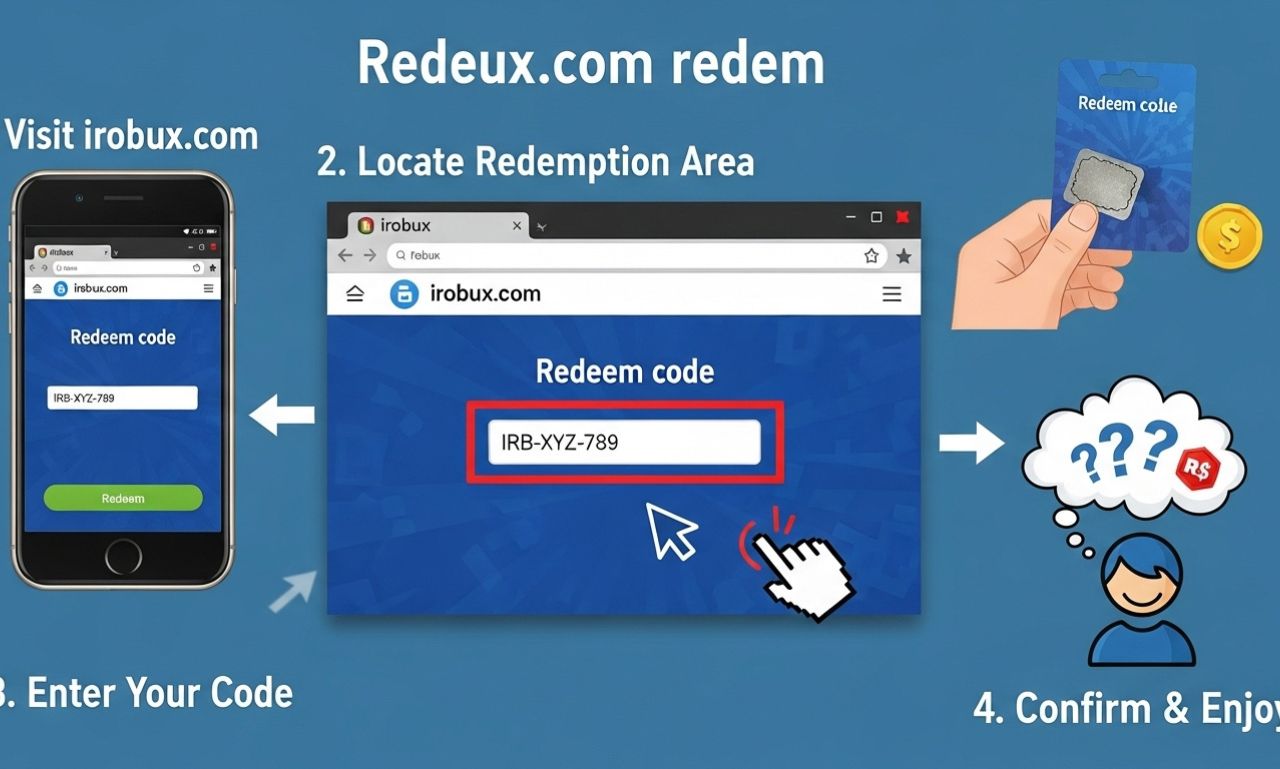
Welcome to the world of irobux.com, where gamers and enthusiasts alike flock to enhance their online experiences. If you’re on a quest for Robux—those coveted virtual currency gems in Roblox—you’ve likely stumbled upon irobux.com. This platform is designed to streamline your journey, making it easier than ever to redeem rewards and elevate your gaming adventure. But what does the redemption process entail? And how can you ensure a seamless experience? Let’s dive in and explore everything you need to know about irobux.com redeem!
What is irobux.com redeem?
Irobux.com redeem refers to the process of exchanging earned points or virtual currency for valuable rewards on the iRobux platform. Users accumulate these points through various activities, such as completing surveys, playing games, or engaging with content.
Once you have enough points, it’s time to redeem them. This can lead to exciting prizes like gift cards or in-game currencies that enhance your gaming experience. The redemption process is designed to be user-friendly and straightforward.
Participants often find joy in seeing their efforts translate into tangible benefits. It encourages active engagement within the community while rewarding users for their participation. What sets this platform apart is its commitment to providing a seamless transition from effort to reward.
Tips for a Successful Redemption
To achieve a successful redemption on irobux.com, start by ensuring you have the correct account details. Double-check your username and any associated email addresses to avoid errors.
Timing can also play a significant role. Try redeeming during off-peak hours when traffic is lower for smoother processing.
Keep an eye out for any promotional codes or bonuses that might enhance your redemption value. These offers can significantly impact what you receive in return.
Be patient throughout the process. Sometimes, it may take a little longer than expected for transactions to complete due to system load or verification steps.
Maintain clear communication with customer support if issues arise. They are there to help and often resolve problems quickly when contacted promptly.
Common Issues and How to Solve Them
While using irobux.com for redemption, users may face some common issues. One frequent problem involves account verification delays. Ensure that you’ve provided accurate and up-to-date information to speed up this process.
Another issue is the failure of codes to work during redemption. If you encounter this, double-check for any typos or extra spaces in your code. Sometimes, refreshing the page can also help.
Users might experience difficulty accessing their accounts due to forgotten passwords. Take advantage of the password recovery options available on the site.
Slow website performance can be frustrating when trying to redeem rewards. Clear your browser cache or switch browsers as a quick fix to improve loading times and enhance your overall experience at irobux.com.
The Benefits of Redeeming on irobux.com
Redeeming on irobux.com opens the door to a world of opportunities for gamers. One of the most appealing benefits is instant access to in-game currency, which enhances your gaming experience significantly.
Additionally, users often enjoy exclusive rewards that are not available elsewhere. These perks can include unique items or avatars that set players apart from the crowd.
The platform’s intuitive interface makes navigating through the redemption process straightforward. This user-friendly design ensures that even newcomers can redeem their points without hassle.
Moreover, frequent promotions and offers mean you get more value for your efforts. Regular users benefit from bonus deals that enhance their overall returns.
Participating in irobux.com fosters community engagement among gamers who share tips and experiences. This connection enriches the entire gaming adventure while helping everyone maximize their rewards effectively.
Step-by-Step Guide to Redeeming on irobux.com
To redeem on irobux.com, start by visiting the website. Make sure you’re logged into your account. If you don’t have one yet, create it—it’s quick and easy.
Once logged in, navigate to the redemption section. Here, you’ll find various options based on what you’re looking to redeem. Choose wisely; each option offers different benefits.
Next, enter any required information for your chosen reward. This might include codes or specific details related to your account.
After inputting the necessary data, double-check everything for accuracy. A simple mistake can delay the process.
Submit your request and wait for confirmation via email or notification on-site. Keep an eye out; this usually arrives within a short time frame!
Tips for Maximizing Your Redemption Experience
To make the most of your irobux.com redeem experience, timing can be crucial. Try to redeem during peak hours when promotions are more frequent.
Always double-check your account details before starting the redemption process. Accurate information ensures smooth transactions without any hiccups.
Stay updated on special events or bonus offers that may enhance your rewards. Sometimes, a little research can lead to significant benefits.
Engage with the community through forums and social media platforms focused on irobux.com. Users often share experiences, tips, and even tricks that could elevate your redemption results.
Don’t hesitate to contact customer support if something feels off. They can provide insights into issues you might not have considered before diving into the redemption process.
Common Issues and How to Resolve Them
While redeeming on irobux.com, users may encounter a few common issues. One frequent problem is the failure to receive confirmation emails after redemption. Check your spam folder; sometimes these emails land there.
Another common hiccup is entering incorrect information during the process. Always double-check your details before submitting any forms. A simple typo can lead to delays or failed transactions.
If you experience slow loading times, try refreshing the page or clearing your browser’s cache. This often resolves temporary glitches that might hinder your progress.
If rewards don’t appear in your account after a successful redemption, reach out to customer support promptly. They’re usually quick to assist and clarify any concerns regarding missing items or credits.
Conclusion
When it comes to navigating the world of online rewards, understanding the intricacies of irobux.com redeem can significantly enhance your experience. The platform offers a streamlined process that allows users to exchange their earned points for valuable items and services. By following the tips shared in this guide, including troubleshooting common issues and maximizing your redemption potential, you’ll be well-equipped to enjoy all that irobux.com has to offer.
Whether you’re a seasoned user or just starting out, embracing these strategies will help ensure that you make the most of every opportunity available on irobux.com. Happy redeeming!

Email authentication is essential for protecting your domain from spoofing, phishing attacks, and unauthorized email activity. An SPF record checker helps businesses quickly verify their Sender Policy Framework (SPF) records, identify DNS configuration errors, and confirm that authorized mail servers can send emails on their behalf. Regular SPF checks can also improve email deliverability and protect domain reputation. By detecting common issues such as multiple SPF records, syntax errors, and excessive DNS lookups, organizations can maintain reliable email authentication and strengthen their overall email security.
What an SPF Record Checker Is and Why It Matters
An SPF record checker is an essential tool for organizations and domain owners committed to robust email authentication and domain authentication. This utility performs a real-time SPF lookup on a domain’s DNS records to verify the existence, structure, and effectiveness of its Sender Policy Framework (SPF) settings.
SPF, as defined by RFC 7208, allows domain administrators to specify which mail servers are permitted to send email on their behalf, thereby preventing many forms of email spoofing and reinforcing phishing protection.Maintaining a valid SPF record through regular SPF checks is critical. Without proper SPF validation, organizations risk having unauthorized senders exploit their domains for spam or phishing campaigns, leading to compromised sender identity, impaired deliverability, and diminished domain reputation.
Major mailbox providers, like Google, Microsoft, and Verizon, use SPF information to determine message legitimacy and assign SPF status (SPF pass or SPF fail), directly impacting the acceptance or rejection of messages.
How SPF Records Work in DNS and Email Authentication
The Role of SPF in DNS-Based Email Authentication Protocols
An SPF record is stored as a TXT record within a domain’s DNS records. When a sending server transmits email purporting to be from a domain, the recipient’s mailbox provider performs an SPF lookup—querying the domain’s DNS for its SPF record and evaluating whether the sending server’s IP address is authorized.
At its core, the SPF mechanism checks the “Return-Path” domain, retrieves the related TXT record, and parses the SPF record syntax. This string usually starts with v=spf1, followed by mechanisms indicating authorized senders—such as IP4, IP6, A record, MX record, PTR, include tags (referencing other SPF records like _spf.google.com or spf.protection.outlook.com), and ends with an all mechanism specifying a default policy for unmatched addresses.
Email Authentication and Sender Identity
SPF validation through DNS records helps certify the sender identity and ensures that only verified servers—either internal mail hosts or third-party services—send emails on the domain’s behalf. This foundational layer of email authentication protocols works alongside DKIM (DomainKeys Identified Mail) and DMARC (Domain-based Message Authentication, Reporting and Conformance) to provide multilayered protection, reduce incidents of phishing attacks, and maintain DMARC compliance.
SPF Trees and Complex SPF Policies
Larger organizations often require more complex SPF records. The SPF tree—the network of included SPF records—can quickly become convoluted when delegating sending authorization to multiple services (e.g., mass mailing platforms or CRM tools). Proper use of SPF tags, inclusion of IP addresses, and careful policy management become essential in these scenarios, especially when considering the DNS lookup limit (a hard cap of 10 DNS lookups imposed by mailbox providers during SPF checks).
Using an SPF Record Checker for Quick DNS Lookup
How an SPF Record Checker Works
An SPF record checker, such as the one provided by EasyDMARC or integrated into popular SPF Lookup Tools, offers a straightforward way to perform quick DNS lookups for SPF records. These tools automate the process of extracting the TXT record from the DNS, deciphering the SPF record syntax, and conducting in-depth SPF validation.
Popular SPF Diagnostic Tools and Approaches
- Web-Based SPF Lookup Tools: Services like the EasyDMARC* *SPF Record Checker or the MXToolbox SPF Diagnostic Tool offer user-friendly interfaces. Users enter a domain name; the service fetches and analyzes the domain’s current SPF status, highlights invalid SPF records, and produces clear indicators (such as “SPF Pass” or “SPF Fail”).
- Command Line Utilities: For advanced users, command line tools such as nslookup and dig can perform SPF command line checks:
*dig* TXT yourdomain.com
- This returns all TXT records (including v=spf1 entries), which can then be manually interpreted.
- This returns all TXT records (including v=spf1 entries), which can then be manually interpreted.
- Automated Reporting: Some managed services send SPF reports or integrate periodic monitoring to alert administrators of changes or potential issues.
Rapid Detection of DNS Configuration Issues
With a reliable SPF test tool, administrators can instantly verify whether an SPF record exists for a domain, review the list of authorized IP addresses or included services, and detect misconfigurations. The SPF checker flags concerns such as an invalid SPF record, multiple records, syntax errors, or excessive DNS lookups—even tracing the full SPF tree, including nested records like _spf.easydmarc_us._d.easydmarc.pro.
Common SPF Record Errors and How to Fix Them
Typical Issues Encountered During SPF Validation
Many domains fail SPF checks due to overlooked syntax errors, poor SPF record management, or violations of operational limits. The most frequent errors uncovered by SPF lookup and SPF diagnostic tool analysis are:
- Multiple SPF Records: Only one SPF record (TXT record with v=spf1) is permitted per domain. Multiple entries cause ambiguity and result in an SPF fail.
- Syntax Errors: Incorrect use of SPF tags, misplaced mechanisms (e.g., missing or incorrectly-positioned include, *ip4*, or all terms), and typographical mistakes cause the SPF record to be ignored.
- Exceeding the DNS Lookup Limit: If the total number of DNS-based mechanisms and modifiers in a record—across the SPF tree with all include tags—exceeds the limit of 10, the SPF check returns a permerror (permanent error).
- Referencing Decommissioned or Invalid Services: Third-party services may change their SPF endpoints (such as transitioning from one vendor to another), resulting in referencing invalid or obsolete SPF records.
- Missing or Outdated Authorized Senders: If new sending sources (marketing platforms, helpdesk solutions, etc.) are not added as authorized senders, legitimate emails from those services will lead to SPF fails.
How to Fix SPF Record Issues
Steps for Error Remediation
- Consolidate Multiple Records: Check with your domain registrar or DNS hosting provider to merge all settings into a single v=spf1 TXT record.
- Correct Syntax: Use SPF record examples from trusted sources or an SPF test tool to ensure compliance with RFC 7208. Double-check the sequence and boundaries of SPF tags, mechanisms, and modifers.
- Optimize Includes and Mechanisms: Minimize DNS lookups by pruning unnecessary include tags, flattening the SPF tree, or using managed solutions (like Managed SPF from EasyDMARC) to consolidate authorized IP addresses.
- Remove Legacy References: Stay updated with all third-party services’ documentation for correct SPF endpoints (e.g., _spf.google.com, spf.protection.outlook.com).
- Test Changes: After every edit, rerun a fresh SPF check via a specialized SPF record checker to validate the DNS changes.
Best Practices for SPF Records and Stronger Email Protection
Maintaining an Effective SPF Policy
Robust SPF record management demands more than just setting up an initial policy. Here are best practices to enhance email security and enforce stronger domain authentication:
Regular Monitoring and Risk Assessment
- Periodic Monitoring: Regularly re-run SPF record checkers, and consider automated checks from managed services to catch accidental deletions, unauthorized changes, or issues introduced by DNS propagation delays.
- Risk Assessment: Analyze SPF reports and investigate every SPF fail. Overlooking repeated failures can leave the domain vulnerable to phishing attacks and reduce deliverability.
Keep SPF Records Simple and Compliant
- Minimize SPF Tree Depth: Prevent DNS lookup overload by flattening includes and listing critical authorized senders directly.
- Limit the Use of the All Mechanism: Set the terminal all mechanism thoughtfully: -all (hard fail) is strict, ~all (soft fail) is gentler but can let through some unauthorized mail. Select based on your outbound email authentication risk profile.
- Audit Sending Sources: Regularly review all internal mail servers and third-party services that send on your behalf.
Integrate with Other Authentication Protocols
- Enable DKIM and DMARC Policies: Pair SPF checks with DKIM for message integrity and implement a robust DMARC Policy for comprehensive DMARC compliance. This triad helps mailbox providers (including Google, Microsoft, and Verizon) authenticate, filter, and report more accurately.
Delegate SPF Record Management When Necessary
- Use Managed SPF Services: Enterprises managing multiple domains, complex SPF trees, or frequent staff changes should consider Managed SPF by providers like EasyDMARC to handle SPF record validation, periodic monitoring, and reporting.
Real-World SPF Record Examples
A basic SPF record for Google Workspace:
v=spf1 include:_spf.*google*.com ~all
For Microsoft 365 and an on-premises mail server:
v=spf1 *ip4*:203.0.113.5 include:*spf.protection.outlook.com* -all
For complex organizations, records may reference multiple include tags and require diligent oversight to avoid an invalid SPF record.
By following these strategies and taking advantage of modern SPF diagnostic tools, organizations can perform reliable, quick DNS lookups, ensure that only authorized senders transmit messages, and maintain a gold standard in email authentication and email security for their domains. To learn more, check my SPF record.


Cybersecurity has become an essential part of running a modern business. As organizations increasingly depend on cloud platforms, connected devices, online applications, digital identities, and remote work environments, protecting digital assets has become more challenging. PrimaSecure.com is a cybersecurity provider focused on helping organizations across Africa address these challenges through managed security services, risk management, threat detection, and digital trust solutions.
What Is PrimaSecure.com?
Prima Secure is an African-focused Cybersecurity-as-a-Service provider that helps organizations improve their cyber resilience. The company says its approach is designed around the operational, regulatory, connectivity, and resource realities faced by businesses across the African continent.
Rather than requiring organizations to replace their existing security infrastructure, Prima Secure emphasizes a vendor-agnostic approach. Its services can work with existing networks, endpoints, cloud environments, and identity systems.
Why Cybersecurity Matters for Businesses
Businesses today handle large amounts of sensitive information, including customer details, financial records, employee information, intellectual property, and operational data. A successful cyberattack can potentially interrupt operations and expose confidential information.
Common threats include phishing, malware, ransomware, unauthorized access, compromised credentials, and vulnerabilities in software or infrastructure. Because threats can occur outside normal business hours, continuous monitoring can play an important role in an organization’s security strategy.
Managed Cybersecurity Services
One of Prima Secure’s key areas is managed cybersecurity. Its services are designed to provide ongoing monitoring, detection, and response rather than relying solely on occasional security assessments.
The company describes its managed security approach as providing continuous threat monitoring and support from security analysts. This can be particularly useful for organizations that do not have the resources to establish and operate their own 24/7 Security Operations Centre (SOC).
24/7 Security Monitoring
Cyber threats can emerge at any time, making continuous visibility an important component of cybersecurity.
Prima Secure provides 24/7 monitoring as part of its managed security offering. Its security operations approach focuses on three broad activities: watching the environment for potential threats, analyzing suspicious activity, and taking appropriate action when incidents are identified.
Continuous monitoring can help organizations identify suspicious activity earlier and support faster investigation and response.
Threat Detection and Response
Detecting a threat is only one part of cybersecurity. Organizations also need processes for investigating incidents and responding appropriately.
Prima Secure provides threat detection and response services intended to identify, analyze, and respond to evolving cyber threats. Its threat-response offering also focuses on incident management, risk management, and reducing the potential impact of security incidents.
Endpoint Detection and Response
Endpoints such as laptops, desktops, and servers can become targets for attackers. Endpoint Detection and Response (EDR) solutions help organizations monitor endpoint activity and investigate potentially malicious behavior.
Prima Secure lists EDR among its managed cybersecurity capabilities and describes its offering as including continuous monitoring, threat hunting, remediation, and integration with leading EDR platforms.
Vulnerability Management
No cybersecurity strategy is complete without understanding where weaknesses exist.
Vulnerability management involves identifying security weaknesses, assessing their potential importance, prioritizing them, and taking steps to address them. Prima Secure includes vulnerability management among its cybersecurity services and describes the process as continuous rather than a one-time activity.
Regular vulnerability assessments can help businesses gain a clearer understanding of weaknesses across applications, systems, and networks.
Identity and Access Security
Unauthorized access remains a significant cybersecurity concern. Strong identity and access controls can help organizations ensure that users have appropriate access to systems and information.
Prima Secure’s services include Multi-Factor Authentication (MFA) and Privileged Access Management (PAM). MFA requires users to provide additional verification beyond a password, while PAM focuses on controlling, monitoring, and auditing privileged accounts.
Email Security
Email remains an important communication channel for businesses and is also frequently targeted by cybercriminals.
Prima Secure provides email security services designed to address threats such as phishing, malware, and spam. Email security can incorporate filtering, encryption, and authentication technologies to improve protection for business communications.
SSL Certificates and Digital Trust
Cybersecurity also involves protecting communications between websites and their users. SSL certificates help establish encrypted connections and authenticate websites.
Prima Secure offers SSL certificates as part of its broader digital security services. Its privacy policy also identifies digital trust, PKI, and SSL-related services among the company’s offerings.
For businesses operating websites, applications, and online services, properly managed digital certificates can be an important component of a broader security strategy.
A Security Framework Based on NIST
Prima Secure states that its cybersecurity services are structured around the NIST Cybersecurity Framework. The framework provides a structured way to approach cybersecurity risk through functions including Govern, Identify, Protect, Detect, Respond, and Recover.
Using a recognized framework can give organizations a systematic way to evaluate their security posture rather than approaching cybersecurity as a collection of unrelated tools.
Vendor-Agnostic Security
A notable aspect of Prima Secure’s approach is its focus on working with technology organizations already use.
Instead of automatically requiring a business to replace existing security products, Prima Secure says it evaluates the existing environment and works to integrate appropriate tools. This approach may be useful for organizations with established security infrastructure that want additional monitoring, expertise, or response capabilities without completely rebuilding their technology stack.
Cybersecurity for African Organizations
Prima Secure positions itself specifically around the African market. The company states that its services take into account regional operational, regulatory, connectivity, and resource considerations.
Its listed locations include offices or regional operations in South Africa, Zimbabwe, and the Democratic Republic of the Congo. The company’s main office is listed in Sandton, South Africa.
This regional focus allows Prima Secure to combine cybersecurity technologies with services aimed at organizations operating in African markets.
Why a Managed Security Approach Can Be Useful
Maintaining cybersecurity internally can require security specialists, monitoring infrastructure, threat intelligence, incident-response processes, and continuous staff development.
A managed cybersecurity provider can provide access to security monitoring and specialist expertise without requiring every organization to build a full internal security operation. Prima Secure specifically promotes its managed SOC services as an alternative to maintaining an in-house 24/7 Security Operations Centre.
Final Thoughts
PrimaSecure.com focuses on helping organizations strengthen their cybersecurity through managed security, threat detection and response, vulnerability management, identity protection, email security, SSL certificates, and related services.
Its vendor-agnostic model is designed to work with existing technology, while its NIST-based approach provides a structured framework for managing cybersecurity risks. With an emphasis on African organizations, Prima Secure offers a combination of continuous monitoring, security expertise, and technology integration aimed at helping businesses improve their digital resilience.
As cyber threats continue to evolve, organizations can benefit from treating cybersecurity as an ongoing process rather than a one-time project. Services such as continuous monitoring, vulnerability management, threat detection, and incident response can form important parts of that long-term strategy.

A good video does not always require an expensive camera, a professional studio, or years of experience with editing software. The way people produce digital content is changing rapidly as artificial intelligence becomes part of everyday creative workflows.
What makes today’s AI tools particularly interesting is that they can work with ordinary instructions. Instead of manually doing every step, creators can explain what they want and get help planning, writing, designing, editing, or improving their content. This is opening up video production to people who previously found traditional editing software difficult to use.
Video Production Is Becoming More Conversational
Conventional editing is based heavily on controls and commands. Users select clips, move them along a timeline, adjust settings, add effects, and repeatedly preview the result. Although this approach offers detailed control, it can be time-consuming for someone who only wants to produce a straightforward video.
AI introduces a different interaction model. A creator can describe an objective in everyday language and use an AI-powered system to help translate that idea into production tasks. This is where concepts such as a ChatGPT video editor online become relevant to the broader evolution of conversational creative software.
Instead of thinking only in terms of editing buttons, users can think about the result they want: a faster introduction, shorter pauses, clearer captions, a different format, or a more engaging sequence.
One Idea Can Produce Many Versions
Creative work often involves experimentation. A social media creator might have one basic concept but several possible ways to present it. Traditionally, testing each version can require substantial editing time.
AI makes this experimentation easier. A single concept can be adapted into different lengths, tones, formats, or audiences. A long explanation could become a short educational clip, while the same subject could be turned into a series of social posts or a narrated video.
This flexibility is particularly useful for people who publish regularly. Rather than treating every piece of content as an entirely separate project, creators can develop variations from a central idea.
AI Can Help With the Parts Viewers Never Notice
Some of the most useful applications of AI are not necessarily visible in the final video.
For instance, preparing subtitles manually can take a significant amount of time. Searching through a lengthy recording to find a particular statement can also be tedious. Transcription and content analysis can help reduce this manual effort.
AI can assist with other behind-the-scenes tasks as well, including:
- Converting speech into editable text
- Identifying sections of a recording
- Generating draft captions
- Summarizing lengthy footage
- Suggesting titles and descriptions
- Preparing content for different screen dimensions
- Helping organize large collections of clips
These functions can make the overall production process more manageable without changing the creator’s original message.
The Importance of Better Storytelling
Faster editing does not automatically create better videos. A technically polished video can still fail if it lacks a clear purpose or becomes difficult to follow.
This is why storytelling remains important even when AI handles some production tasks. Before creating a video, it helps to know what the viewer should understand, feel, or do after watching it.
For example, a small business explaining a service may achieve better results with a simple problem-and-solution structure than with excessive visual effects. Similarly, an educational video should prioritize clarity rather than filling every second with animation.
AI can provide assistance, but the creator still needs to decide what deserves attention.
AI Video Tools Are Useful Beyond Social Media
Although short-form platforms have helped popularize AI-assisted video creation, these technologies have applications far beyond entertainment.
Teachers can use AI to develop visual learning materials. Companies can create internal training videos. Freelancers can prepare presentations for clients. Non-profit organizations can produce informational campaigns without maintaining a large production team.
Even personal users can benefit. Someone documenting a family event, creating a travel diary, or putting together a birthday video may find AI useful for organizing footage and adding simple creative elements.
Images Are Becoming Part of the Same Workflow
Video creation is also becoming closely connected with generative image technology. Instead of searching for an appropriate stock image every time a visual is needed, creators can generate an original concept based on a written description.
For example, a person creating a video about future technology might need an illustration of a futuristic workspace. Generative AI can produce a visual matching the intended atmosphere, which can then be incorporated into the wider project.
This connection between text, images, and video means creators can build a larger portion of their visual content from an initial written concept.
Why Human Review Still Matters
AI-generated material is not automatically perfect. It can misunderstand instructions, introduce visual inconsistencies, create inaccurate captions, or produce an edit that technically works but feels unnatural.
For this reason, reviewing AI-assisted content remains essential. Creators should check names, dates, facts, subtitles, transitions, visual details, and audio before publishing.
There is also a creative reason for human involvement. AI can suggest possibilities, but it does not necessarily understand the personal context behind a story. The final decisions should reflect the creator’s intended message and audience.
The Next Stage of Digital Creativity
AI is not simply adding another feature to video-editing software. It is changing the way people think about the production process itself.
The traditional approach often begins with technical questions: Which tool should I use? Which setting do I need? How do I perform this edit?
An AI-assisted workflow can begin with a different question: What do I want the audience to see and experience?
That shift could make digital video creation more approachable while giving experienced creators new ways to experiment. As AI systems become more capable, the distinction between writing a script, designing visuals, and editing footage may continue to become less noticeable.
For creators, the real advantage is not simply producing videos faster. It is having more freedom to turn an idea into something visual without allowing technical complexity to become the biggest obstacle.
-

 TOPIC1 year ago
Top 5 Features of Googlediqiu You Didn’t Know About
-

 TOPIC2 years ago
Why Large Waterproof Outdoor Rugs Are Essential for All Outdoor Spaces
-

 FASHION2 years ago
How to Layer Your White Dress for Cold Weather?
-

 FASHION1 year ago
How to Choose Sunglasses That Perfectly Complement Your Summer Wardrobe
-

 TOPIC2 years ago
7 Expert Tips For Choosing The Best Basement Renovation Companies
-

 BUSINESS1 year ago
Top 5 Features of Sowix Online That Every User Should Know About
-

 TOPIC1 year ago
Why Greece Katz Martian Has Everyone Talking in 2025
-

 FINANCE2 years ago
How TraceLoans Can Simplify Your Finances